What is a monitor speaker?
Monitor speakers are speakers that do not have any tonal rendering (coloration).
However, they are different from high-fidelity speakers; monitoring is equivalent to full fidelity.
Monitor speakers are a type of professional audio equipment.
Their characteristic is the ability to balance and restore
the sound of high, mid, and low frequency bands.
They do not modify the playback of sound in any way,
rendering it faithfully to restore the audio signal.
Source: Quick Understanding Encyclopedia
A sound system that truly reproduces the original recording appearance,
the basic requirement is neutrality and authenticity.
As an important part of this system, monitor speakers
bear the heavy responsibility of reproducing original recordings.
Basic information about monitor speakers
Monitor speakers are mainly used in control rooms and recording studios for program monitoring. They have characteristics such as low distortion, wide and flat frequency response, and minimal modification to the signal, making them the best at truly reproducing the original appearance of the program. However, this type of speaker is not well regarded in the consumer field. On one hand, most people prefer the more pleasant sound produced by exaggerated modifications of speakers; on the other hand, these speakers are too expensive. The first aspect is actually a misunderstanding of monitor speakers. If a music producer has already processed the sound to be pleasant, monitor speakers can still reveal the modified effect. Clearly, monitor speakers aim to faithfully restore the music producer's intentions; what you hear is what they want you to hear. Therefore, the general public tends to prefer spending the same amount of money on a device that sounds more pleasing to the ear, but this actually undermines the creator's original intent. Thus, those with some understanding of speakers prefer monitor speakers.
Monitor audio
——
Development history
Monitor speaker competition
There seems to be no standard for studio monitor speakers; different studios choose suitable speakers based on their environment and needs. However, before the 1970s, so-called monitor speakers were usually manufactured according to specifications set by authoritative organizations, and sometimes certification was required. Early monitor speakers only required a flat frequency response, precise resolution, and low coloration; how they sounded was not important. Starting from the 1970s, the concept changed, and recording engineers believed that overly loud sounds could affect work mood, so monitor speakers had to balance both aspects. JBL, which separated from Altec Lansing, is a good example; their 4300 series became very popular in Japan due to its pleasant sound. In fact, speakers like the 4320, 4333, 4343, 4344, and 4350 did not have any 'monitoring standards.' At that time, studios were also accustomed to using Altec's 604 and 605 series speakers.
In early Britain, monitor speakers were dominated by Tannoy. After the 1950s, the state-owned BBC began designing monitor speakers for different needs, such as speeches, music, live recordings, and sub-control monitoring, resulting in a series of standards. Manufacturers like Rogers, Harbeth, Spend or, and KEF produced BBC standard speakers. The evergreen LS 3/5a is one of the BBC standards, designed for near-field monitoring, and its sound is recognized as very charming. In the United States, the LC1 series speakers designed by Dr. Osen of RCA were very popular in the 1940s, later gradually replaced by Altec and JBL. Westlake and Wooray, which improved the drivers from these two companies, also achieved good results. In Japan, the state-owned NHK station referred to the BBC standards to formulate the BTS specifications. Mitsubishi Electric manufactured the Diatone 2S205 and 2S305 according to this specification in the 1950s, which almost became a common standard for Japanese recording studios until Pioneer and Yamaha joined, leading to diversified development of monitor speakers.
Misunderstandings about monitoring
Many people, especially some Hi-Fi enthusiasts, believe that monitor speakers are rational and lack charm, with charm being what we often refer to as coloration. Therefore, these uncharming speakers are considered unpleasant to listen to. In reality, we should consider this issue from the perspective of the audio source. If the recording quality is poor, or even the singer is not good, then such sound played through monitor speakers will inevitably not sound good. Conversely, if both the singer's level and the recording work are excellent, then how will such music sound when played back through monitor speakers?
General speakers have their own characteristics; for example, some sound sweeter, while others sound fresher. However, for users who require original sound reproduction for recording monitoring, this is unacceptable, so they will use monitor speakers, which are generally more expensive than speakers of the same level.
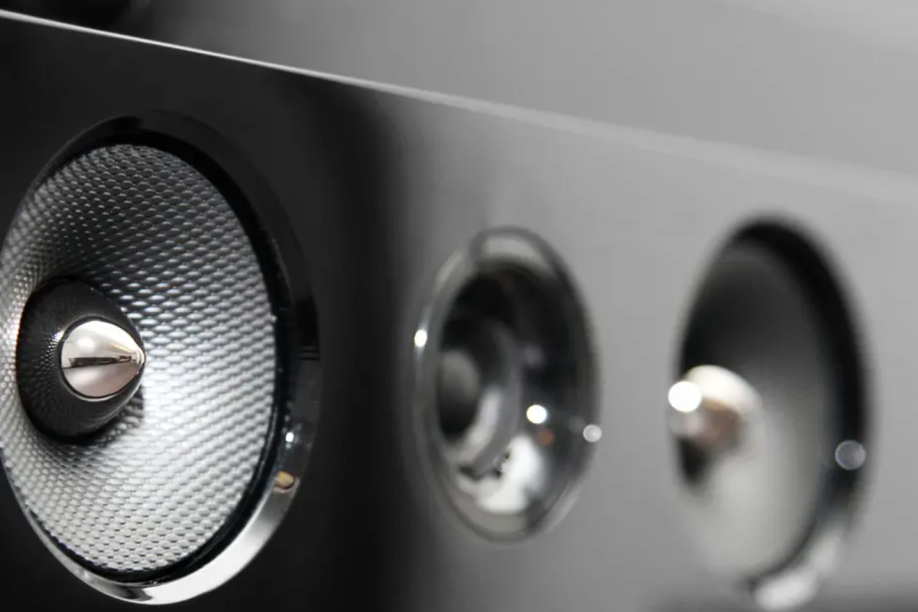
In fact, more people prefer the stylized and personalized sound effects produced by various types of Hi-Fi speakers. For Hi-Fi speakers, there will definitely be some coloration, and manufacturers will make subtle modifications to the corresponding frequencies in the sound based on their understanding of music and the style of their products, which is a form of aesthetic coloration. This is similar to photography, monitors, and other products, where sometimes products with slightly exaggerated colors and over-rendering are more favored by people. In other words, different people have different feelings about tonal preferences, and monitor speakers and ordinary Hi-Fi speakers have different applicable fields.
In summary, a good professional monitor speaker, whether used for reproducing music or for replaying musical details and accompaniment, should perform excellently in terms of sound transparency, spatial sense, and dynamics.

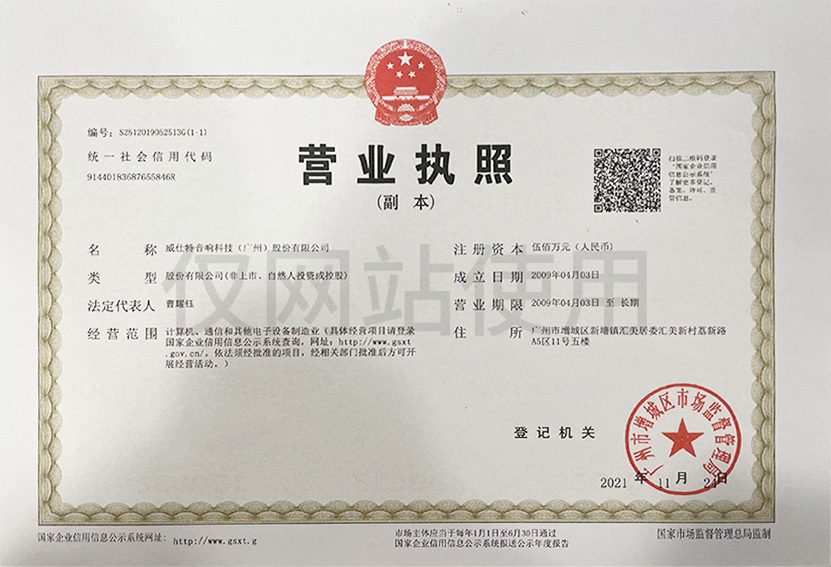
WEISHITE Audio Technology (Guangzhou) Co., Ltd
Address: 5th Floor, No. 11, Area A5, Lixin Road, Huimei New Village, Xintang Town, Zengcheng District, Guangzhou City
E-mail :caoyaoyu@gztsaudio.com

@2025 WEISHITE Audio Technology (Guangzhou) Co., Ltd All rights reserved